



Summary
- What to expect: Explore how applying the best methods from traditional qual to the age of AI is a new frontier for qualitative researchers.
- Why it matters: Use of traditional qualitative research methods has declined due to its cost and lead time. Qual AI resolves these problems, but has not enabled the most sophisticated and valuable techniques that recognize the complexities of human psychology.
- Our solution: EVE Qual Pro by HumanListening. An enterprise-grade Qualitative AI platform that brings the best advanced qualitative techniques, like laddering, projective techniques and storytelling, into the age of AI.
For over a century, qualitative research has been about one thing: understanding people
When we began our careers more than 30 years ago, qualitative research was not treated as a ‘soft’ discipline. Quite the opposite. It was approached as a rigorous, theory-led practice, grounded in psychological models and disciplined technique. We know this because we were trained by early practitioners of motivational research - people influenced by the work of Ernest Dichter and others, who were uncompromising in their insistence on rigor. Yes, qualitative research is flexible, adaptive and human. But it is not unstructured. Structure is what turns anecdotes into insights.
Our training was grounded in two core principles:
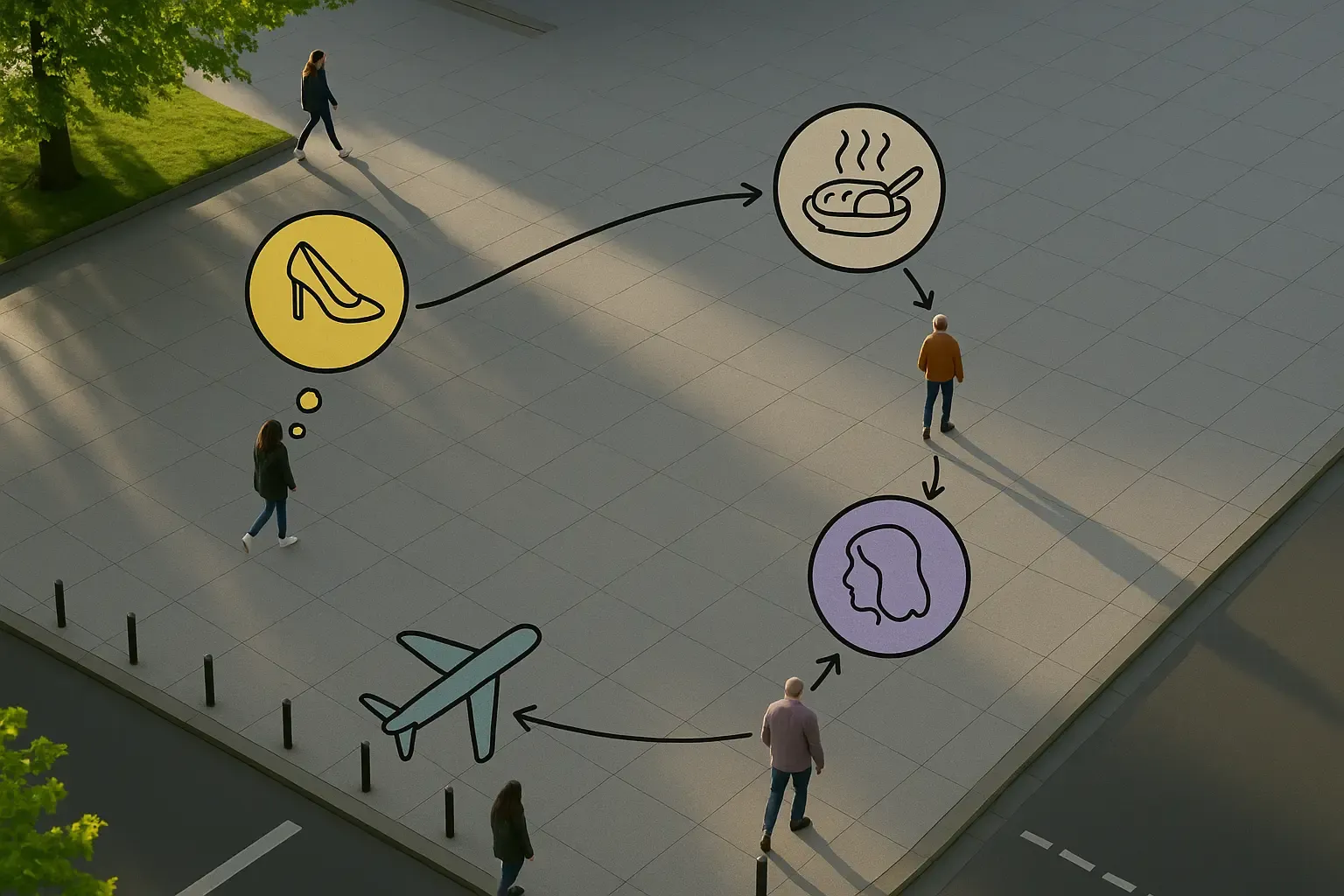
- Human behavior has underlying dynamics. People don’t always know why they do what they do and they are rarely able to articulate it directly without post-rationalizing. That is why motivational research emerged in the first place - to go beneath rational explanations and surface-level opinions.
- Method matters. There is a technique for every occasion. Laddering, projection, storytelling, association, metaphor - these are not ‘nice to have’ creative flourishes. They are disciplined tools designed to elicit deeper meaning, emotion and motivation. When used well, they allow the researcher to access the emotional drivers that sit beneath conscious reasoning.
At the time, much of this thinking was informed by models such as the Triune Brain. While neuroscience has further evolved, the central insight remains the same: human behavior is not driven primarily by rational thought. Emotional and instinctive processes come first; conscious reasoning often follows, explaining decisions after the fact. If you want to understand behavior, you must engage the emotional brain.
Qualitative research didn’t lose its value - it lost its fit with the way organisations make decisions
The pressure on qualitative work hasn’t arrived suddenly; it has been a gradual erosion in fit. As budgets tightened and organisations were asked to do more with less, qualitative research was often the first to be questioned or cut. At the same time, the way organisations used research and insight was beginning to change. Historically, qualitative research has always worked with small samples. Its strength was richness, not measurement. But as organisations became more data-driven, there was growing pressure for validation through numbers - and quantitative research, by its very nature, was equipped to provide that confirmation. This was the beginning of the shift of influence and investment away from qualitative work.
The advent of online research around the early 2000s changed expectations on the speed and cost of market research. From the mid-2010s, organisations increasingly turned to always-on dashboards, digital analytics and agile decision-making models. These created expectations of speed, immediacy and certainty. Qualitative research was still valued for depth, but it was increasingly positioned as something to be used selectively rather than routinely.
At the same time, qualitative literacy declined. Fewer people inside organisations were trained in qualitative methods, fewer senior champions remained, and the craft itself became harder to see. As a result, qualitative research was more often judged on cost and speed than on the quality of insight it delivered.
Then COVID accelerated everything. Face-to-face work largely disappeared, online qualitative became the norm, and organisations discovered they could get ‘something’ quickly, even if it lacked depth. Respondent tolerance also declined, fewer people wanted to give up an hour talking to a stranger, travel to a focus group facility and feel observed. The social contract that once supported traditional qualitative research weakened.
Meanwhile, large language models (LLMs) were advancing in the background. The development of ChatGPT 3 marked an inflection point for the research industry. Suddenly, natural, human-like conversations at scale went beyond the theoretical to become a practical technology. LLMs, Diffusion Models and other varieties of AI have proliferated over the last three years.
Bringing the best advanced qual techniques into the AI era
Fast forward to today: AI has transformed research, delivering speed and scalability. Yet most AI-driven tools for qualitative research fall short. They offer basic functionality like language selection and a fixed number of probes but lack the depth, flexibility and control that serious qualitative researchers demand. As a result, many professionals feel forced to choose between efficiency and craft. We’ve heard many great ‘qualies’ lament their devaluation in the broader research zeitgeist.
This is where EVE Qual Pro comes in.
Introducing EVE Qual Pro: professional-grade Qualitative AI
Built within the HumanListening platform, EVE Qual Pro is for researchers who refuse to compromise on quality. It integrates advanced technology with the control and precision that define the discipline.
EVE Qual Pro was created from our discomfort with the trade‑off between qualitative craft and efficiency. We designed it by embedding decades of qualitative experience into state‑of‑the‑art AI. It builds on our industry‑leading qualitative AI, EVE Builder, and our real‑world experience across almost 8 million qual AI conversations over six years. Importantly, EVE Qual Pro is designed by qual researchers, for qual researchers.
Here’s what makes EVE Qual Pro different:
- Methodological depth at scale Apply proven qualitative techniques - laddering, projective methods, storytelling - within an AI-powered environment. Researchers can probe and prompt at both topic and theme levels, something traditional tools simply can’t do.
- Customizable conversation design Set objectives, choose methodologies from a library, define tonality, and control question sequencing. Randomize topical order for nuanced insights or maintain strict logic for structured studies.
- Template library and reusability Access a curated library of methodologies or create your own templates for future projects. This saves time while preserving rigor. It also gives you scope to be creative and develop your own qualitative methodologies.
- Voice and multi-language integration Enable two-way voice chats and conduct research in multiple languages, expanding reach and inclusivity without sacrificing depth.
- Qualitative dynamics - scaled and analyzed at the speed of industry Research budgets are under pressure, and qualitative often goes first. EVE Qual Pro delivers efficiency gains while maintaining the richness that makes qualitative research indispensable.
Why is Qual AI more important now than ever before?
The qualitative craft is at a crossroads. Younger researchers may not have been trained in traditional techniques and agencies face growing skepticism about cost and relevance. At the same time, brands need deeper insights to navigate complex markets. EVE Qual Pro positions qualitative research as future-ready, empowering professionals to do what they do best, with tools that meet today’s demands.
By combining AI with methodological rigor, EVE Qual Pro ensures qualitative research remains a vital, respected discipline - and one that thrives in the digital age.
Key takeaways
Qualitative research has always been about understanding people, not just data. The methods developed in the 20th century have great value in the years ahead, but they need modern tools to stay relevant in practice. AI gives us new tools. But the responsibility remains the same: to ask better questions, listen more deeply, and preserve the purpose to find the meaning behind behavior.